
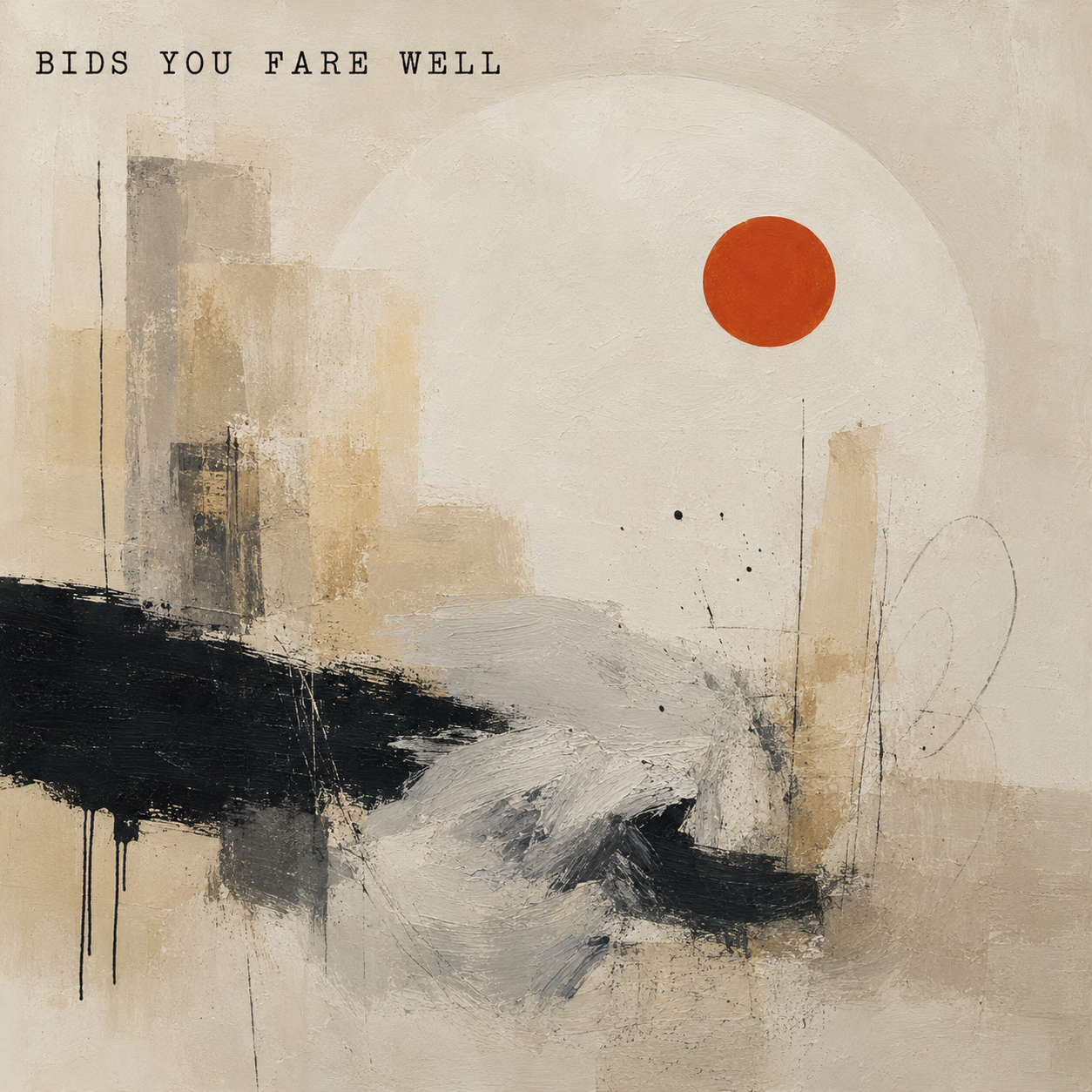
In this week’s 10 Questions we get to know JB Frady, an indie artist from South Carolina, USA.
Their song ‘Bids You Fare Well‘ is currently featured on the NAS Spotify playlists
You can follow JB Frady on Twitter/X
1. Tell us a little about where you are from.
Born and raised in South Carolina, USA. I was born on the Naval base in Charleston, grew up in the rural reaches of the upstate, and now I live about fifteen minutes from Clemson University. By day, I sell insurance. In my off hours, I’m a novelist with a project in the developmental stages. I’m an award-winning poet with the San Francisco Writers Conference, I’m an occasionally-performing standup comic, and I took up sculpting tobacco pipes when I needed to recover my arm strength after a nasty bike injury. But when I’m not doing any of the above, I like trying to turn my odd poetry into something musical.
2. What inspired JB Frady to start playing and making music?
I took lessons for a couple years on the guitar and I’d say I’m serviceable. I’m a beginner on the keyboard/MIDI but that’s largely self-taught. And I’m not the worst singer in the world. For me, music came through poetry. I’ve been writing poems since I was 12 and around age 14, I realized that songs were just poems with music attached, and that most of these poems were monstrosities if you read them on paper. So I’d start writing lyrics and imagining my favorite bands singing them. It wasn’t until much later that I considered doing anything of my own.
I’ve been writing poems since I was 12 and around age 14, I realized that songs were just poems with music attached, and that most of these poems were monstrosities if you read them on paper.
3. Who are JB Frady’s biggest musical influences?
This is the kind of question that always gets a different answer because it depends on which aspect I’m focusing on or what I’m trying to express. In terms of poetry writing, I’m always going to say Bob Dylan, Lou Reed, and Tariq Trotter (Black Thought). Then as you grow older, you realize that all your favorite songs until the turn of 1980 came from producers like Tom Wilson or David Bowie. But I also like incorporating modern sounds, from producers like Zero 7 to people just trying to spread music that makes people happy, like Victor Wooten.
4. What are your goals in the music industry or as an artist?
To play around explore the medium. I think we’re in a moment where we can take a step back not to ask what music is, but what it could be. In every art, it’s about exploring the boundaries and finding what lies beyond. I’m still trying to find where that line is. Then I’ll cross it, make some mistakes, and make a few great things too.
5. Tell us about your creative process.
The process varies, but it always starts with a feeling. Something I want to convey. Then I pick a sound that goes with that feeling, in a linguistic way. Every time you say a word, it forces your mouth to move. As a poet inspired by early 20th century writing, it’s about how it feels to say what you’re saying. So I try to write the poetry to match the feeling, but also to create a sensation as you sing along. For example, if you listen to my track, Watch Me As I Fade, the whole song is written around the sound of the vowel A.
This track is a little more complicated because I change the rhyme scheme at various points and sometimes I abandon it altogether. Even the refrain in Bids You Fare Well doesn’t rhyme. So in this case, the feeling I’m trying to create is discontinuity.
As a poet inspired by early 20th century writing, it’s about how it feels to say what you’re saying.
6. What is your all-time favorite song by another artist and why?
There’s no correct answer to this question because favorites are a moving target, but when in doubt I always say Golden Years by David Bowie. It’s funky, it’s upbeat, and it has a fun story. It was originally written for Elvis but he didn’t want it.
7. What is the best advice you have either given or received in terms of music?
A friend of mine once told me that I need to learn to be more honest and vulnerable in my music. I doubt I’ve followed it, but it’s fantastic advice.
8. What is your proudest accomplishment?
My proudest accomplishment is in learning how to like people. It’s easy to fall prey to the demons of our nature when we’ve been wronged, or hurt, or feel abandoned in life. Learning how to get past that, and to enjoy the company of others, and to want to see them happy, that’s my proudest accomplishment. I’ve always wanted to be an artist, but art is just the transmission of feeling from one party to another. If I couldn’t learn to have the kinds of feelings worth sharing, then I never could’ve been what I consider a true artist.
I’ve always wanted to be an artist, but art is just the transmission of feeling from one party to another.
9. What’s been your most embarrassing moment so far?
Probably the first time I dropped out of college because it was dramatic and unexpected. The second time, it was my decision and I knew what I was doing. But that first time? Oof.
10. Tell us about your lowest and highest points in music so far.
The lowest point was when I first gave up music. I was in my mid-twenties, taking lessons, writing songs, and I got laid off. Before long, I was evicted and that meant selling most everything I had. It was like my whole life got put on a hiatus, especially creatively. But more recently, the high point has been my EP entitled 4RWW because it brought me back to the beginning.
When I was 12, I wrote my first poem after my grandfather passed away. The rhymes were simple, the metering was nonexistent, but my mom cried when she saw it. She printed several copies and paid to have it run in the paper.
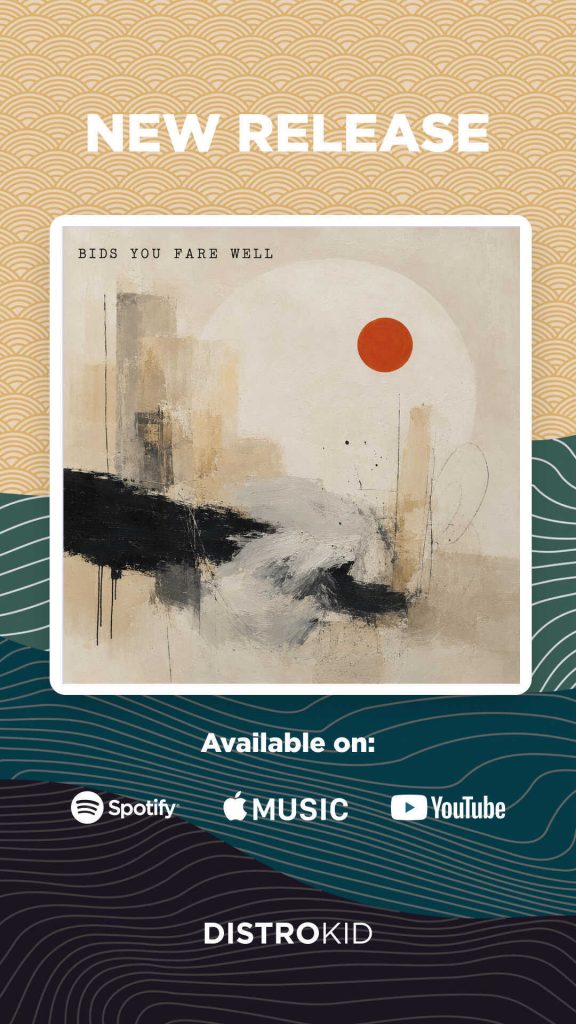
Last year, my stepfather passed away. He helped raise me, and while we never saw eye to eye on a single thing in the world except classic rock music, his sudden absence changed how I see life. I wrote that EP to encapsulate the ways that his passing changed how I see life and death at large. This new release, Bids You Fare Well, is also a poem I wrote after losing him, but I didn’t release it with the rest because it was too experimental and I just wasn’t happy with it yet.


Leave a Reply