
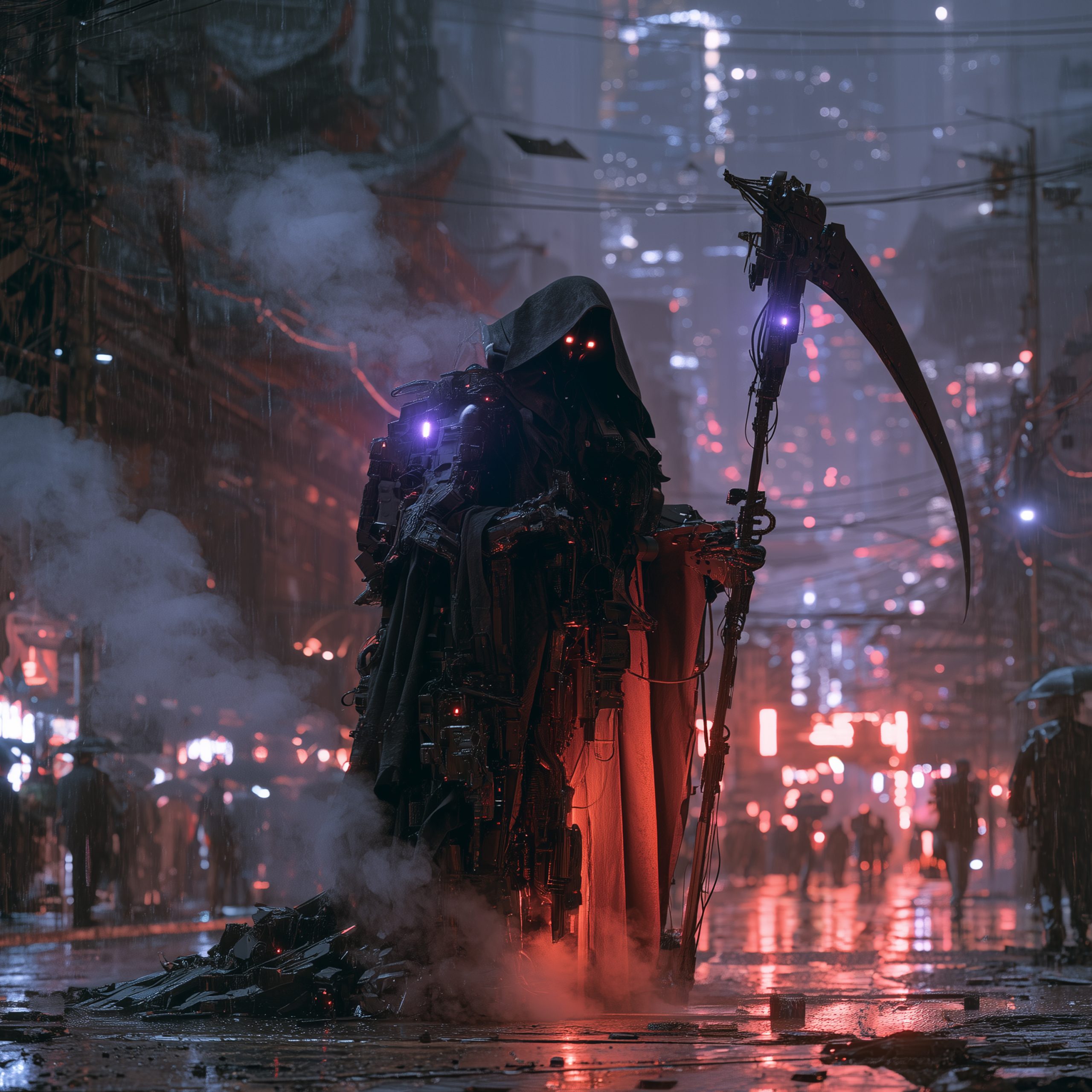
In this week’s 10 Questions we get to know SYNTHRAZER, an indie artist and producer from San Clemente, CA, USA.
Their song ‘FREEZE‘ is currently featured on the NAS Spotify playlists
You can follow SYNTHRAZER on Instagram, Tik Tok, X, YouTube, Soundcloud and Facebook
1. Tell us a little about where you are from.
I’m originally from Oregon, but I moved to Northern California as a young child. At age 20, I moved to Southern California and have lived in the Los Angeles, Orange County, or San Diego areas for most of my adult life. I currently live in San Clemente, CA, the southernmost city in Orange County. It’s a small beach community, and I love it.
By day, I work in the video game industry as a Lead Producer, helping build award-winning video games and the technology behind them. That world has definitely influenced the way I approach music, especially my love for cyberpunk, science fiction, technology, and creating something that feels bigger than just a song.
Outside of that, I’m the artist and producer behind SYNTHRAZER, an independent electronic music project blending dark techno, synthwave, industrial, and EBM sounds with a cinematic cyberpunk atmosphere. I write and produce everything out of my home studio, and right now I’m focused on continuing to develop the SYNTHRAZER sound, releasing new music, and building out the larger world and identity around the project.
2. What inspired SYNTHRAZER to start playing and making music?
As a child of the ’80s, I became obsessed with all kinds of music starting in the third grade, especially electronic music and anything built around synthesizers. Over the years, my tastes have moved through rock, metal, country, rap, industrial, techno, trance and progressive, synthwave, and darker electronic music. I’ve always been fascinated by the way music can create an entire atmosphere or world.
For a long time, I was a listener rather than a musician. I DJ’d electronic music for many years, but never produced my own. Professionally, I spent most of my creative energy working in video games, where music, art, technology, and storytelling all come together. Eventually, I reached a point where I wanted to create something that was completely my own, from the first sound to the finished track.
That’s really where SYNTHRAZER came from. I started experimenting with music production, synthesizers, and sound design and quickly became obsessed with it. I realized I could combine so many things I already loved, cyberpunk, science fiction, games, film, and electronic music, into one creative outlet. It stopped being about simply making songs and became about creating unique sounds and building a world that I wanted to exist in.
Eventually, I reached a point where I wanted to create something that was completely my own, from the first sound to the finished track.
3. Who are SYNTHRAZER’S biggest musical influences?
My musical influences are pretty broad and come from several different eras and genres. I grew up with artists like Depeche Mode, New Order, Nine Inch Nails, and The Cure, and later became heavily influenced by electronic music, especially industrial, techno, trance, and progressive. More recently, artists like Carpenter Brut, Perturbator, Gesaffelstein, and Extra Terra have been big influences on the darker, heavier side of what I create.
I’d describe SYNTHRAZER as a collision of dark techno, synthwave, industrial, EBM, and cinematic electronic music. Some tracks lean heavily into techno and club energy, while others are slower, heavier, or more atmospheric. I don’t really want the project locked into one specific genre. The common thread is the world around it: dark, futuristic, cinematic, and distinctly cyberpunk.
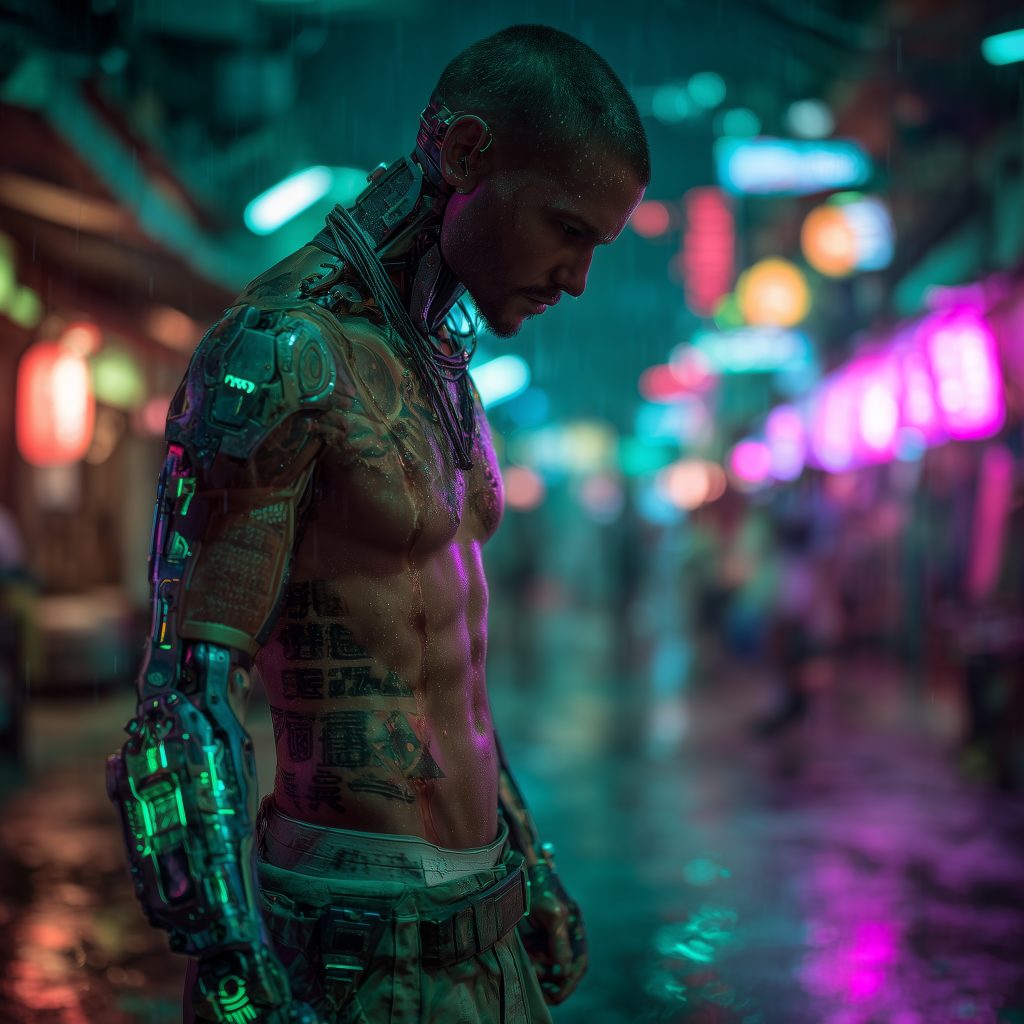
I’m especially drawn to distorted synths, heavy bass, driving rhythms, atmospheric pads, and sounds that create tension and scale. I want a SYNTHRAZER track to feel less like you’re simply listening to a song and more like you’ve stepped into a neon-lit dystopian city at 2 a.m.
4. What are your goals in the music industry or as an artist?
My ultimate goal is to reach a point where I can make music for a living and dedicate myself to SYNTHRAZER full-time. I’ve spent much of my professional life helping build other people’s creative visions, and I’d love to eventually have the opportunity to put that same energy into building my own.
At the same time, success to me isn’t just about numbers, streams, or income. I want to build a real audience around SYNTHRAZER and create music that people genuinely connect with and want to come back to. I want to keep evolving the sound, release more ambitious projects, collaborate with other artists, and continue expanding the visual world and identity surrounding the music.
Long term, I’d also love to see SYNTHRAZER music find its way into video games, films, television, and other media. Given my background in games, having these two parts of my creative life eventually intersect would be incredibly rewarding.
Ultimately, I want SYNTHRAZER to become something sustainable that I can continue building for years. If I can make the music I want to make, find an audience that connects with it, and eventually make a living doing it, that’s the dream.
5. Tell us about your creative process.
My creative process is pretty organic, and I rarely start a track knowing exactly where it’s going to end up. Usually it begins with a sound, a bassline, a synth progression, a beat, or even just an atmosphere that catches my attention. I’ll start experimenting with it and gradually build outward until the track begins to develop its own identity.
I spend a lot of time experimenting with synthesizers and sound design. Sometimes the imperfections or unexpected sounds are what end up defining the entire track. Once I find that core idea, I start layering drums, bass, synths, textures, effects, and melodies around it. I tend to work iteratively, listening over and over, adding things, stripping things away, and letting the track tell me what it needs.
There’s also a very visual element to the way I make music. I’m often imagining a place, scene, or moment while I’m working: a futuristic city at night, a chase through neon-lit streets, a massive industrial space, or something more introspective and atmospheric. That mental imagery influences everything from the sounds I choose to the pacing and structure of the track.
Eventually, a story starts to emerge from the music. That’s usually when the title, artwork, and visual identity begin coming together as well. For me, SYNTHRAZER isn’t really a process of making the music first and figuring out everything else afterward. The music, imagery, atmosphere, and story tend to evolve together as different pieces of the same world.
6. What is your all-time favorite song by another artist and why?
This is both an insanely hard and insanely easy question to answer at the same time. When I first heard “High Roller” by The Crystal Method, it literally blew my mind! I had never heard a track like that before. It had this dark, clubby vibe but was still distinctly unique and completely its own thing. I still go back and listen to that track a lot for inspiration. There’s just something about the energy, atmosphere, and sound that has stuck with me all these years. Man … I freaking LOVE that song!
When I first heard “High Roller” by The Crystal Method, it literally blew my mind!
7. What is the best advice you have either given or received in terms of music?
The best advice I’ve received is pretty simple: just keep making music. Don’t wait until you think you’re good enough, don’t obsess over whether every track is perfect, and don’t compare where you are today to someone who has been producing for twenty years. Finish songs, put them out into the world, learn from them, and then make the next one.
I think there’s a huge temptation, especially when you’re starting out, to endlessly tweak something because you think it needs to be perfect. But I’ve learned more from actually finishing and releasing music than I ever would have from endlessly working on the same track.
I’d also add one piece of advice of my own: make the music you actually want to hear. Trends change. Genres come and go. Algorithms change. But if you’re creating something you genuinely love, at least you know there will always be one person who wants to crank it up ridiculously loud! And hopefully along the way you find a few other people who do too!
8. What is your proudest accomplishment?
My proudest accomplishment as an artist was releasing my first-ever original track, “Bleed Neon. Shatter The Grid.” There’s something incredibly rewarding about going from being a lifelong music fan and DJ to sitting down and actually creating something completely from scratch, finishing it, and putting it out into the world with my name on it.
I remember hearing the finished track and thinking, “Holy shit…I actually made this.” That was the moment SYNTHRAZER went from being an idea in my head to something real.
I’ve released a lot more music since then, and hopefully there are much bigger accomplishments still ahead of me, but I don’t think anything will ever replace that feeling of releasing the first one. It proved to me that I could actually do this, and I’ve working on doing it ever since.
There’s something incredibly rewarding about going from being a lifelong music fan and DJ to sitting down and actually creating something completely from scratch, finishing it, and putting it out into the world with my name on it.
9. What’s been your most embarrassing moment so far?
I’ve been alive long enough to have an unfortunately deep catalog to choose from. But for this interview, I’ll relay a brief story from when I was DJing at a club in downtown San Diego called L5. This was many years ago, I don’t think it’s there anymore.
Anyways, I was soooo excited to be playing there. It was my first night at the club, all of my friends were there watching, DJ friends from all over were there watching…and man, I trainwrecked EVERY mix. Badly. I was absolutely mortified. The nerves clearly won on that occasion.
Needless to say, they never had me back. Haha!
10. Tell us about your lowest and highest points in music so far.
The lowest points for me have probably been the times when someone has accused my music of being AI-generated. I put an enormous amount of time and effort into every track, from writing and arranging to sound design, mixing, and obsessing over tiny details that probably nobody else will ever notice. So when someone hears the finished product and immediately dismisses it as “AI,” it can be incredibly frustrating. I have nothing against using new technology as a creative tool, but there’s a big difference between using tools and having the work itself reduced to “a machine made this.” I know how many hours went into every one of those tracks.
The high points far outweigh the lows, though. Releasing my first track, “Bleed Neon. Shatter The Grid.,” will always be one of them. That was the moment SYNTHRAZER became real. Another huge milestone was releasing my first full album, System Initialization. Seeing an entire collection of music that I had written and produced come together as a finished body of work was incredibly rewarding.
And then, to my surprise, people actually bought the album! It was a very small number, haha, but honestly, that didn’t matter. Knowing that someone out there connected with something I created enough to actually spend their money on it was an incredible feeling.
There are numbers and milestones I’d love to reach in the future, but those two moments are hard to beat. One was proving to myself that I could actually make and release a track. The other was proving to myself that I could build an entire album and a world around it, and that there were people out there who actually wanted to be part of that world.


Leave a Reply