Proyecto AuRICULAR’s artist page is HERE
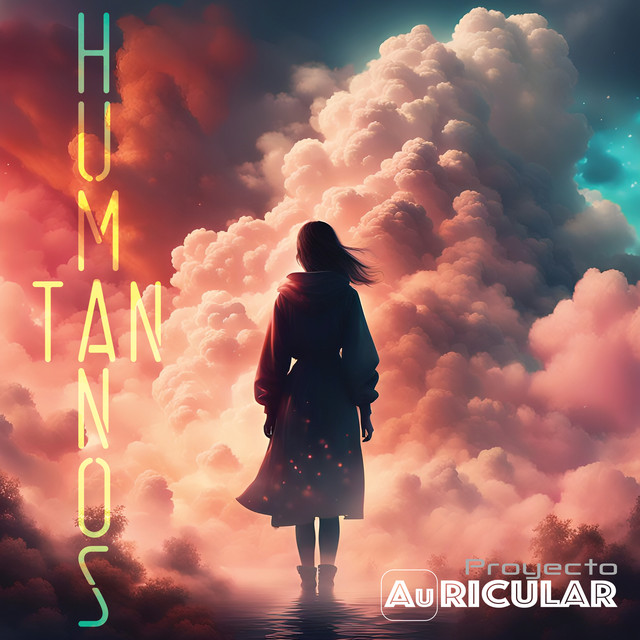
“Tan Humanos” by Proyecto AuRICULAR: A Song for Being
It is a cold afternoon in Mexico City, a good moment to drink a coffee, take a break, and listen to music. The chosen coffee bean is from Oaxaca; the music is jazz fusion; the grind is medium, because the coffee will be an Americano; and my Moka Express coffee maker has a faulty gasket. Let’s listen.
But what is this: jazz fusion, Americano coffee, Oaxacan beans, an Italian coffee maker?
Yes, that is Mexico: a cosmopolitan city where one lives, listens, feels, and breathes a mix of many cultures. A place where music is part of everyday life; it accompanies you on public transportation, in shops and markets, and in domestic routines. And no, Mexico does not look sepia; sometimes there is pollution, but the levels never turn the city that color. From this very city comes the artist featured in this review.
The coffee is ready—sip, and let the music play.
A sweet sound from a Rhodes piano breaks the silence. Soft and delicate, like coffee steam in the air, with its characteristic stereo tremolo. The harmonies grow more complex, and each new chord is a surprise that refreshes the ear and carries the music forward.
Twenty seconds in, the right moment arrives for the entrance of drums, bass, and voice—but this is no ordinary voice. A soft, airy voice, perfectly placed in a middle register, as if emerging from the piano’s overtones: it is the voice of Pam Suárez, who opens the lyrics with the line:
“Es el aire
Es el aire el viento
Respirar”
The vocal EQ in the mix keeps the words clearly defined, and the subtle echo gives them an ethereal sense of fragility. An electric guitar in the background follows the voice without taking center stage, guiding the music toward the pre-chorus, intelligently brightened by a triangle.
“Sueño entre mis sueños
La piel de tu espacio
Exhalar en esta luz
Sin descanso”
The chorus arrives, and it is time for the voice to shine in a higher register. The drums remain simple, never shouting; the triangle fades out; a discreet pad with its own personality enters; and a guitar—yes, I think it is a guitar—softened with reverb, counterpoints the voice.
“En el aire
Donde todo sigue
Donde eres tú
Donde siempre vives”
Let’s talk about the lyrics, because this is no ordinary set of words. It is a song by Carlos Castañeda—wait, not the Carlos Castañeda you are thinking of, although there is something of that other one here, not in the shamanic imagery, but in a deeper way of conceiving experience. The lyrics do not aim to explain or narrate; they create a space to inhabit and breathe, to be with the air, as if consciousness were seeking its place in the body before the mind.
The way the lyrics are arranged on the page recalls the fragmentary writing found in Octavio Paz’s poetry, leaving room “on the paper,” and in time itself, for breathing and reflection.
And who is the author? Carlos Francisco Castañeda Girón (bass, guitar, and programming), who, together with Pam Suárez, forms Proyecto AuRICULAR. Yes, I wrote it correctly. I suppose “Au” refers to gold, since it appears as a separate syllable in the design of their profile image—or perhaps I am just imagining things.
After the chorus comes… you know it doesn’t.
Although I could talk about the timbral beauty of the piano chords shaped by Olawepo Tayo, the elegance of the guitar, the balance of the mix, and the softness of the voice, it is impossible for you to feel it simply by reading these lines. From here on, you have to go listen to it and experience it for yourself.
I know, I know—you were left wanting to read more; that will be for next time.
For now, I can only conclude that “Tan Humanos,” by Proyecto AuRICULAR, is a song in which every sonic element manages to turn listening into a space simply to be, to breathe, and to be that which makes us only human.
The cup is empty. I’m Adán Ramírez. Greetings from the Great Tenochtitlán.
This review was submitted by fellow NAS artist: Adán Ramírez
Their artist page can be found HERE